

The Treat Yourself Tax: A Budgeting Framework That Makes Room For Joy (Two Ways)
You cut the coffee. You cancelled the subscriptions. You said no to the girls' trip.
And you still felt broke and miserable.
That's the part nobody tells you about restrictive budgeting — it doesn't just cut the spending, it cuts the joy right along with it. And when the joy goes, so does your motivation to stick with the plan. You white-knuckle it for three weeks, then blow it all on a Target run out of pure spite.
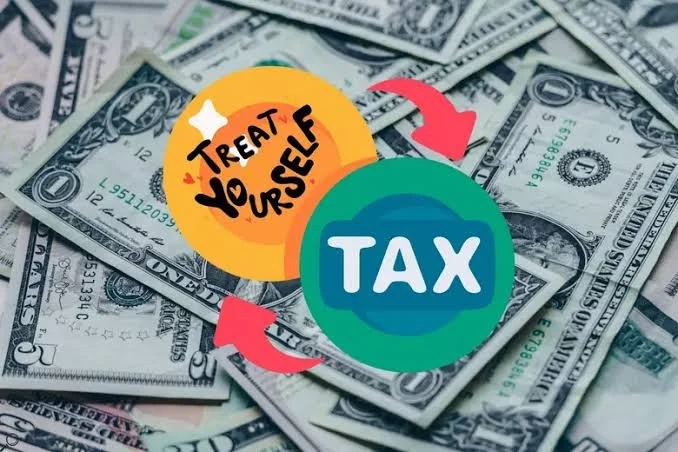
I built the Treat Yourself Tax because I got tired of watching people treat their budget like a punishment. A good budget should fund your life — not just your bills. So when Bustle picked it up, and it landed me on Good Morning America, I wasn't surprised. Everybody's tired of budgeting like it's a prison sentence.
Here's the thing though — the version that went viral is only half the framework. Let me give you both.
The Concept
The Treat Yourself Tax is simple: you're not choosing between saving and spoiling yourself. You're doing both, on purpose, at the same time. If you remember the show “Parks and Recreation”? The name came from that, but the concept of the plan came from years of not budgeting myself into my budget or feeling that I couldn’t because the funds were on fumes.
"It's about looking at your money, figuring out what brings you joy — big or small — and building that in on purpose," is what I told Bustle. It works because it's flexible and real. It helps you stick to your budget without it feeling like punishment.
There are two ways to run it, depending on where your cash flow actually is.

Method 1: Buy It Twice
This is the one that went viral. It's for the person who already has a little breathing room.
Every time you buy yourself something unnecessary — the latte, the shirt, the concert ticket — you immediately move that exact same dollar amount into savings. $7 matcha? $7 to savings. $30 top you didn't need but wanted? $30 to savings. $100 pair of shoes? You know what to do.
You get the treat. Your future self gets matched. No guilt, no guessing — just structure.
It also does something sneaky: it makes you pause. Before you tap your card, you start asking, do I actually want this, or am I just stressed or bored? If the tax on something feels excessive, that's usually your answer. You get more intentional with your money without ever having to say no to yourself.
Method 2: The Treat List (For When Cash Flow Says No)
Buy It Twice assumes you've got double the money to move. A lot of you don't — and that's exactly why I built the second version.
This is the Budget Joy version — permission to be a little whimsical with your money, on purpose. Instead of matching a purchase, you build a list ahead of time of things that light you up. TJ Maxx run. Fresh flowers. A solo movie date. That mascara you love. Nothing on this list has to be practical. That's the point — it's supposed to feel a little indulgent, a little "just because." It’s legit like budgeting yourself into the budget you have. Then you break the list into price tiers:
Free.99 to $20
$21 to $40
$41 and up
You can use those tiers as-is, or build your own price points around what actually applies to your life. Either way — when payday hits, or whenever cash flow allows, you pull from the list based on what you can actually afford that pay period. Not what Instagram told you to want. What's already on your list.
This does two things at once. It gives you permission to treat yourself without derailing your budget, and it forces you to build a bigger toolkit of things that bring you joy — so "treating yourself" stops meaning "whatever's in front of me at TJ Maxx" and starts meaning something you actually chose.

Give It A Landing Spot
Whichever method you use, that treat money needs somewhere to live until you're ready to spend it — not just floating in your checking account waiting to disappear.
This is where a sinking fund comes in. I keep mine at Ally, in a savings bucket earmarked just for this. You open one, name it something that reminds you why it exists — "TYT Fund," "Joy Money," whatever gets you excited to see it — and let your treat dollars sit there. But most HYSAs are starting to add sinking funds to their product features -which I love.
Here's the bonus move: if you want a bigger payoff instead of a small one, you can skip cashing out for a while and let the fund compound. Instead of spending it on the $20 treat today, you let it build toward the $150 experience you actually want in three months. Same habit. Bigger tax return.
I go deeper on this exact move in Budgeting For Life: Sinking Funds For Experiences, Goals & Emergencies — watch that if you want to see how I structure mine.
Make It A Game, Not A Chore
If you want to see how far this habit can stretch, pair it with a challenge. I've talked about this on YouTube in Low & No Spend Challenges: Budget Hacks That EXPLODE Savings and in Save $5,050 In 100 Days? Try The Sticky Note Savings Challenge. Both work the same muscle as the Treat Yourself Tax — small, consistent moves that add up loud.
The Treat Yourself Tax isn't a diet for your bank account. It's a system. And systems only work if you actually enjoy running them.

What This Looks Like With Clients
This is one of the first things I build into the budgets I do with clients — because a plan that doesn't account for joy is a plan people abandon by month two. Whether we're starting from scratch in a full Financial Planning engagement, digging into what's not working in a Budget Audit, or I'm building the whole thing out for you in Budget Done For You, the Treat Yourself Tax (or a version of it) shows up. Your budget should feel like it belongs to you, not like it's punishing you for having a life. You can read about how my sessions went for some of my clients - the results, connected in joy.
Q For Your A:
What's on your Treat Yourself Tax list right now?
Is it a TJ Maxx wander, a flower run, a solo movie date, or something you're letting compound for the bigger payoff? Drop it in the comments — I read every one.
Want Help Building Your Version Of This?
If you're reading this thinking "okay but how do I actually build this into my real numbers" — that's what I do.
I don't do templates. I look at what's real for your life and build a budget that has room for both your goals and your joy. Find out more here.
Financial Planning — Build your full financial picture from scratch, with the guidance to actually understand it.
Budget Audit — Already have a budget, but it's not clicking? Let's find out why.
Budget Done For You — Hand me the numbers, I build the system.
Not ready yet? Cool. Keep reading. Keep learning. Or join the newsletter. When you're ready to stop guessing, I'll be here.
